
Choosing deck stain: opacity, condition, and preparation
Compare deck stain opacity and learn why the existing coating, wood condition, and preparation matter before choosing a finish.
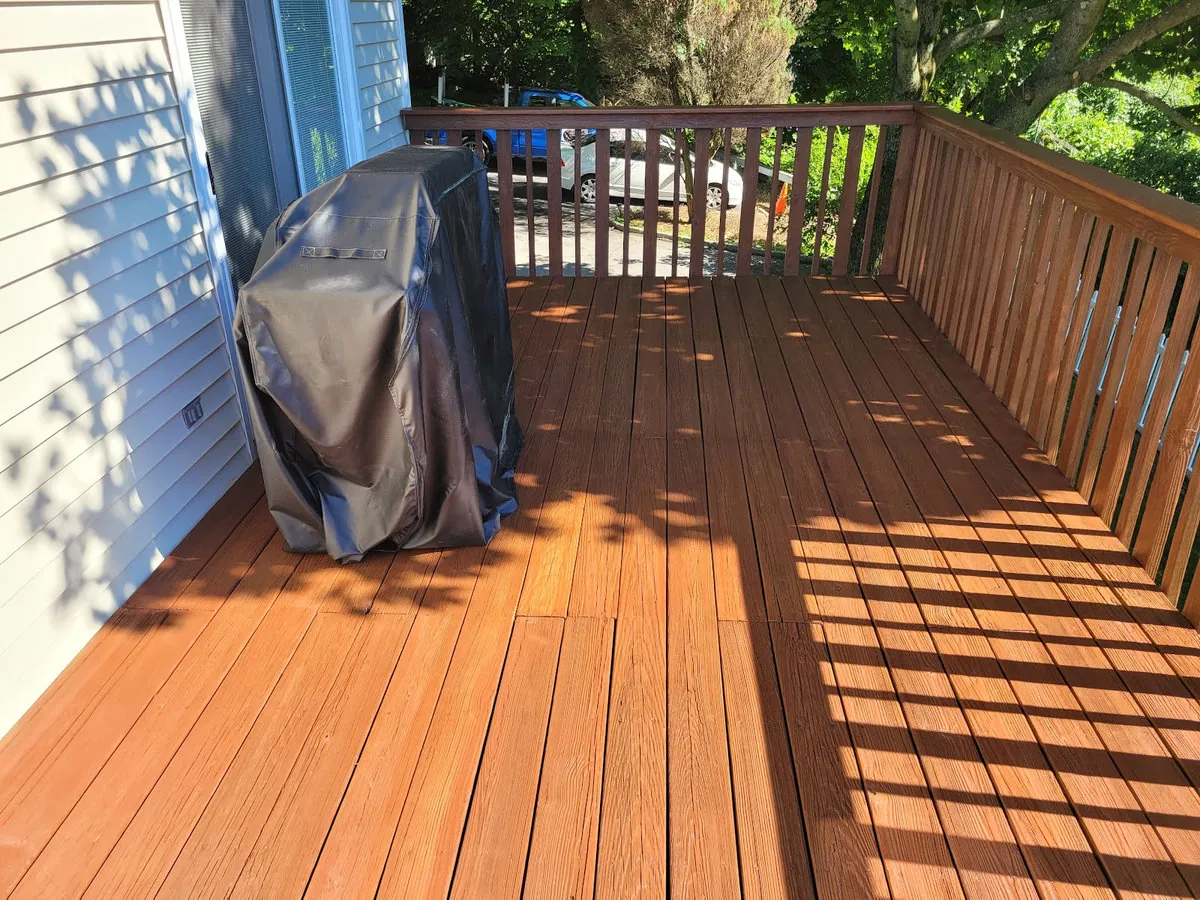
Start with the deck you have.
Before choosing a stain color, identify the decking material, existing coating, and condition. An older coated deck and new bare wood are not the same starting point. Tell the contractor what has been applied before, when it was done, and whether there are leftover product records.
Share what you want to change: more visible wood grain, a more uniform color, or a refresh of the existing look. Then ask which options are compatible with the surface after the proposed preparation. A color card cannot answer that compatibility question.
Understand what opacity changes.
Opacity describes how much of the wood's appearance shows through the stain. Benjamin Moore describes translucent finishes as showing the wood, semi-transparent finishes as revealing much of the grain and texture, and higher-opacity options as hiding more of the grain.
The wood's own color and condition affect the result. Review a suitable test area or sample rather than assuming a stain will look identical on every board. The manufacturer's stain selection guide is a useful starting point, but the specific product must be appropriate for the surface and use.
Ask what preparation is included.
Have the estimate distinguish cleaning, any required coating removal, surface preparation, repairs, and finishing. Ask how the existing coating will be evaluated and which conditions must be met before the new product is applied.
Do not assume that a lighter or more transparent appearance can be achieved simply by applying a new stain over what is there. Discuss the preparation needed and whether the desired change is practical. Keep railings, steps, deck boards, and surrounding painted surfaces clearly separated in the scope.
Treat damaged wood as a separate decision.
A coating is not a structural repair. If boards, steps, supports, or railings appear unsafe, restrict access and arrange an appropriate assessment before planning a cosmetic finish. Ask who will identify repair needs and how those items will be priced and approved.
For mixed materials, identify exactly which components are being coated. Wood decking, composite boards, metal railings, and previously painted trim should not be treated as interchangeable surfaces. Follow the guidance for the actual material and selected coating.
Plan for the time the deck cannot be used.
Include furniture storage, pets, access to doors, and the return-to-use instructions in your plan. Ask:
- Where will outdoor furniture and planters stay during the work?
- What surface and weather conditions does the proposed product require?
- When can people walk on it, and when can furniture return?
- What cleaning and maintenance guidance applies to this finish?
Make the estimate specific.
For a Binders deck staining discussion, provide your town, a ground-level overview photo, the approximate size, and any known product history. Include steps and railings in the photos when it is safe to do so.
The useful end result is a written plan for your deck, not a generic promise about how long every stain lasts. Exposure, use, surface condition, preparation, and the chosen product all belong in the maintenance conversation.
Join the conversation
Questions or experiences related to this article are welcome. Comments are reviewed before appearing here.
Loading comments…